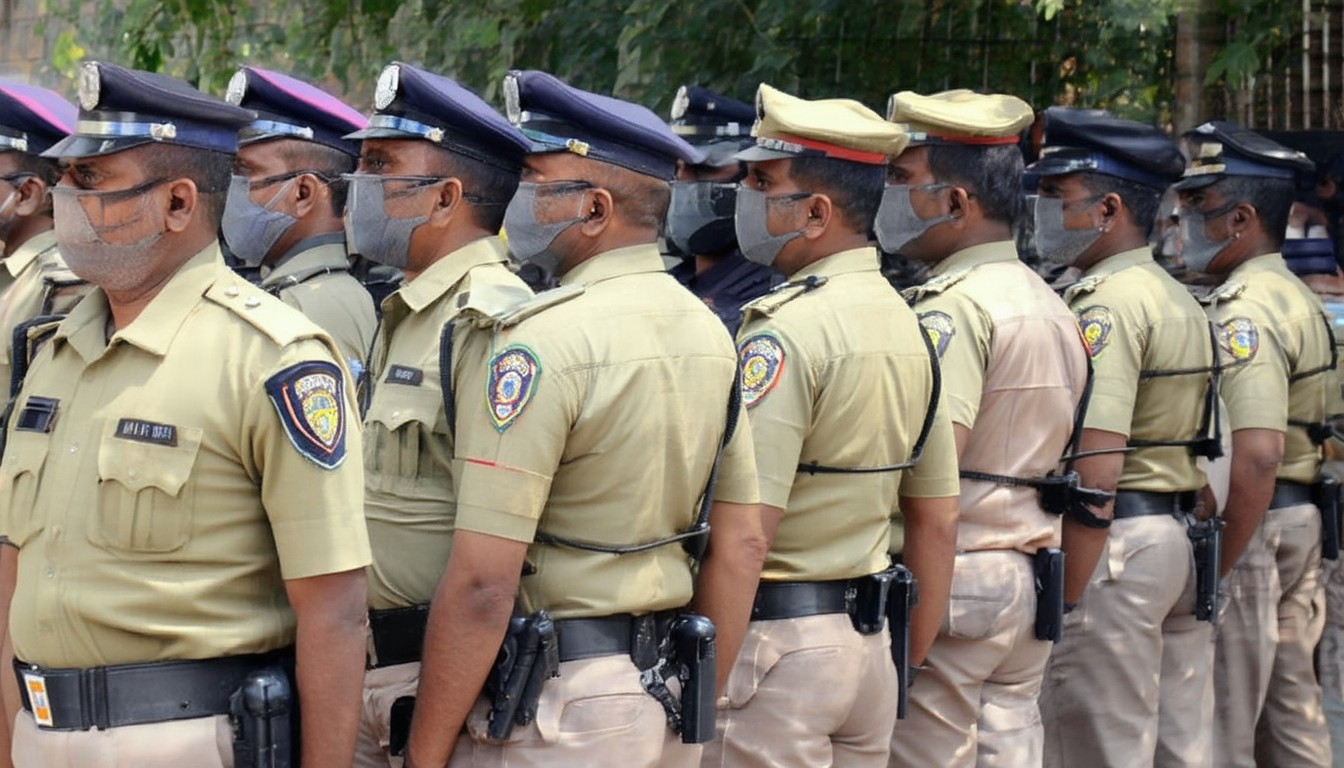
Section 41 CrPC: Powers of Police to Arrest Without Warrant
The powers vested in the police to arrest individuals without a warrant represent a crucial junction between law enforcement and personal liberty. Section 41 of the Code of Criminal Procedure, 1973 (CrPC) is central to this equilibrium in India, granting police officers the discretion to arrest suspects in specified circumstances without prior judicial authorisation. As society evolves and debates over civil rights intensify, the interpretation and application of Section 41 CrPC have gained renewed scrutiny from courts, policymakers, and the public alike.
Beyond the black letter of the law, the implementation of Section 41 raises essential questions. When does a police officer justifiably exercise this power? What are the built-in checks and balances to prevent misuse and protect citizens’ fundamental rights? Through the lens of statutory framework and recent judicial trends, a closer look at this provision underscores its profound impact on criminal justice and the ongoing challenge of balancing safety with freedom.
Legal Framework: Decoding Section 41 CrPC
Section 41 CrPC delineates circumstances under which police can arrest without a warrant. It applies primarily to cognizable offences—those where police may initiate an investigation without the court’s permission—and sets clear parameters for action.
Key Provisions of Section 41 CrPC
Section 41(1) lists the specific scenarios authorising a warrantless arrest, such as when a person:
- Is concerned in a cognizable offence,
- Is in possession of stolen property,
- Obstructs a police officer in the discharge of duty,
- Has escaped lawful custody,
- Is reasonably suspected to be designing to commit a cognizable offence.
Further, Section 41(1)(b) introduces the test of “reason to believe” and “satisfaction of necessity” for arrest, urging officers to weigh alternatives before depriving someone of their liberty.
Amendments for Safeguards
The Code of Criminal Procedure (Amendment) Act, 2008 introduced stricter checks, particularly for offences punishable by less than seven years’ imprisonment. The law now requires officers to:
- Record reasons for arrest in writing,
- Note reasons for not making an arrest (if action is declined),
- Issue a notice of appearance in appropriate cases instead of making an immediate arrest.
These changes reflect an evolving legal consciousness attuned to the risks of arbitrary detention.
“The purpose of Section 41 is not to encourage routine arrests, but to empower police only in cases of genuine necessity, subject to careful judicial scrutiny.”
— Justice Dr. D.Y. Chandrachud, Supreme Court of India, interpreting Section 41 in Arnesh Kumar v. State of Bihar (2014)
Judicial Interpretation and the ‘Arnesh Kumar’ Guidelines
Overzealous arrests for minor offences have long troubled India’s justice system, clogging jails and infringing on individual rights. Judicial intervention has therefore shaped the practical contours of Section 41.
The Arnesh Kumar Case: A Landmark in Police Arrest Powers
In 2014, the Supreme Court’s verdict in Arnesh Kumar v. State of Bihar became a watershed moment. The Court laid down mandatory safeguards designed to curb the culture of routine arrests, particularly in matrimonial disputes and less severe offences. The guidelines emphasize:
- Mandatory recording of reasons when arrest or detention is deemed unnecessary,
- The requirement for police to serve a notice to appear (u/s 41A CrPC) in situations where arrest isn’t immediately warranted,
- Judicial Magistrates’ duty to scrutinize case diaries for compliance before authorising further detention.
Post-Arnesh Kumar, many states have issued directives to their police forces, updating arrest protocols and emphasising sensitivity to proportionality and evidence.
Recent Trends and Continuing Challenges
Despite these efforts, the National Crime Records Bureau (NCRB) reports continue to highlight concerns over pre-trial detention and the high proportion of undertrials in India’s prisons. Experts suggest that while judicial guidance has improved accountability, awareness among citizens and training for police personnel remain critical gaps.
Practical Application: Arrest Protocols and Rights of the Accused
Beyond the statutes and courts, the day-to-day realities of arrest processes affect millions. A typical scenario demonstrates both the utility and limitations of the law:
Arrest Without Warrant: A Scenario
Consider a case where a police officer receives credible information that an individual is about to commit a theft in a market area. Under Section 41 CrPC, the officer may:
- Assess whether the offence qualifies as cognizable and the necessity of immediate arrest,
- Record reasons for proceeding (or not proceeding) with the arrest,
- If appropriate, serve a Section 41A notice for the individual’s voluntary appearance.
However, if the alleged offence is less severe and the suspect cooperates, the officer is expected to avoid arrest and, instead, opt for notice or other procedural alternatives.
Rights and Remedies Available to Citizens
Section 41 CrPC, complemented by other CrPC sections and constitutional safeguards, ensures that:
- The arrested individual must be informed of the grounds for arrest,
- They have the right to legal counsel,
- Production before a magistrate within 24 hours is mandatory.
If these procedures are breached, the individual may seek remedies including writ petitions, compensation, or departmental action against erring officers.
Balancing Law Enforcement and Civil Liberties
The philosophy behind Section 41 is clear: empower police to protect society, but ring-fence this power to ward off abuse. In practice, this delicate balance is continually tested.
Challenges in Implementation
- Discretion vs. Uniformity: Changing crime scenarios demand officer discretion, yet this flexibility sometimes leads to arbitrary actions.
- Training and Awareness: Many lower-rank police officers lack updated training on amended protocols, resulting in procedural lapses.
- Public Awareness: Citizens often remain unaware of their rights during arrest, making them vulnerable to overreach.
Case Studies: Progress and Persistent Issues
In various states, targeted training sessions for police and judicial monitoring have produced measurable improvements. Yet, high-profile cases like wrongful detentions during protests or communal tensions indicate areas where enforcement diverges from legislative intent.
Comparative Perspectives: India and Other Democracies
Globally, the issue of arrest without warrant is weighed against the backdrop of human rights. The United Kingdom’s Police and Criminal Evidence Act, 1984, and the US Fourth Amendment, for instance, lay down strict procedures and require “probable cause” for warrantless arrests.
India’s evolving framework under Section 41 echoes these international norms, moving steadily towards a system where arrest is not a routine but a last-resort measure, subject to constant judicial oversight.
Conclusion: Reimagining Section 41 CrPC for Modern Justice
Section 41 CrPC remains a linchpin of criminal justice, allowing quick response to violations while seeking to ensure humane and just treatment of all individuals. The law’s true promise is realised when officers act prudently, citizens know their rights, and courts enforce accountability at every turn.
As India’s jurisprudence matures and civil society keeps a vigilant eye, the onus is on all stakeholders—legislators, police, judiciary, and citizens—to reinforce the values of fairness and justice within the daily application of Section 41.
FAQs
What offences allow police to arrest without warrant under Section 41 CrPC?
Police may arrest without warrant when a cognizable offence is suspected, someone is in possession of stolen property, has obstructed a police officer, escaped custody, or is about to commit a serious crime.
Are police required to record reasons when making an arrest?
Yes, especially for offences carrying less than seven years’ imprisonment, officers must document reasons for both making or not making an arrest, as mandated by the 2008 amendment.
What are the safeguards against misuse of Section 41 powers?
Courts require that police avoid unnecessary arrests, issue a Section 41A notice when feasible, and present records for judicial scrutiny. The accused must be informed of their rights and produced before a magistrate promptly.
Can a person challenge an arrest made under Section 41 CrPC?
Individuals can challenge wrongful or arbitrary arrests in court, seek bail, file complaints with oversight bodies, or approach the National Human Rights Commission if procedures are violated.
How has the Arnesh Kumar judgment changed police arrest procedures?
The Supreme Court’s guidelines from Arnesh Kumar require careful evaluation before making arrests in offences up to seven years, demanding written justification and use of notice for appearance rather than immediate detention where possible.
How do other countries’ laws compare with Section 41 CrPC?
Many democracies have similar provisions allowing warrantless arrest with rigorous checks. India’s post-2008 approach, with its emphasis on proportionality and judicial review, aligns increasingly with global best practices on due process and rights protection.