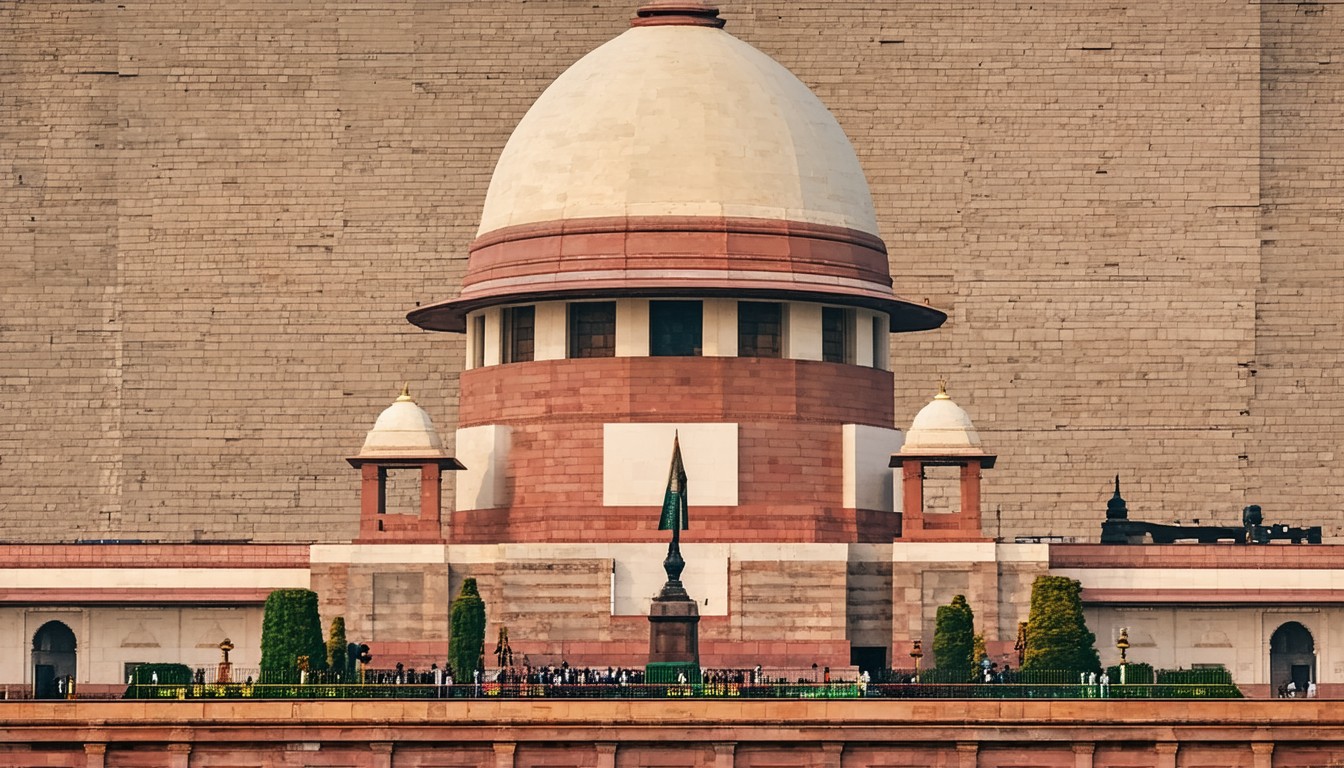
Article 124 of Indian Constitution: Provisions for Supreme Court Judges
Article 124 of the Indian Constitution lays the very foundation for the Supreme Court of India—the country’s highest and most influential judicial authority. Conceived by the Constitution’s framers to ensure justice and maintain constitutional balance, Article 124 not only outlines the structure of the Supreme Court but also shapes the process by which its judges are appointed, their qualifications, and the security of their tenure. In an era where the judiciary often finds itself at the forefront of pivotal national debates, understanding Article 124 is key to grasping the broader legal architecture of India and its enduring commitment to an independent judiciary.
Overview of Article 124: Foundation of the Supreme Court
Article 124 provides the constitutional framework for the creation and sustenance of the Supreme Court. Originally enacted in 1950, the article covers composition, qualifications, appointments, and removal processes related to Supreme Court judges. It has been amended and interpreted over time, with landmark cases and evolving conventions shaping its application.
Key Provisions within Article 124
- Constitution of the Supreme Court: Stipulates that the Supreme Court shall consist of the Chief Justice of India and not more than seven other judges, though this number may be increased by Parliament as deemed necessary. Today, the sanctioned strength exceeds thirty judges.
- Appointment of Judges: The President appoints judges after mandatory consultation with such judges of the Supreme Court and High Courts as he deems necessary.
- Qualifications: A judge must be a citizen of India, have at least five years of experience as a High Court judge, or ten years as an advocate in a High Court, or be a distinguished jurist in the President’s opinion.
- Tenure and Security: Judges hold office until reaching the age of 65, and their removal requires a rigorous process involving Parliament.
These foundational principles aim to insulate India’s highest court from undue influence, ensuring judicial independence throughout the system.
The Evolution and Real-World Impact of Article 124
Changing Composition and the Growth of the Supreme Court
At inception, the Supreme Court had eight judges. Today, congestion of cases and growing legal complexities led Parliament to repeatedly increase the authorized strength, culminating in ongoing calls for further expansion. For instance, in 2019, the court’s sanctioned strength was increased to 34 judges to address significant case backlogs, reflecting Article 124’s adaptable structure.
The Debate over Judicial Appointments: The Collegium System
While Article 124 originally vested appointments in the President, the practice evolved dramatically. Following the landmark Second and Third Judges Cases in the 1990s and 2000s, the judiciary asserted primacy in appointments, establishing the so-called “collegium system”, where senior judges collectively recommend names for elevation.
“The independence of the judiciary is essential to the structure of our democracy, and the process of appointments plays a critical role in safeguarding that independence,” notes former Chief Justice R.M. Lodha, echoing the importance of Article 124’s original mandate and its judicial reinterpretations.
Real-World Example: Navigating Political Tensions
Appointments to the Supreme Court have periodically sparked controversy. In recent years, the government’s desire to reform the collegium system with the National Judicial Appointments Commission (NJAC) encountered judicial resistance, with the Supreme Court striking down the law as unconstitutional in 2015. This tug-of-war between the executive and the judiciary underscores Article 124’s centrality in India’s constitutional checks and balances.
Appointment Process: Safeguarding Merit and Independence
Formal Mechanism under Article 124
Article 124 prescribes a consultative process, where the President is required to consult with the Chief Justice of India and other deemed-appropriate judges. In practice, the collegium—comprising the Chief Justice and four senior-most judges—plays a significant role in nominating candidates.
Criteria for Appointment
- Professional Qualifications: Most Supreme Court appointees have extensive judicial or advocacy experience, often as senior judges in High Courts or distinguished advocates.
- Impartiality and Integrity: The collegium probes the candidate’s record for integrity, impartiality, and professional competence.
Challenges and Critiques
Critics argue that the collegium system lacks transparency and accountability since deliberations occur behind closed doors. Proponents counter that judicial primacy is vital to prevent political interference. The debate is ongoing, with multiple Law Commission reports suggesting reforms to balance transparency and judicial independence.
Tenure, Removal, and Security of Office
Article 124 ensures that once appointed, a Supreme Court judge enjoys robust security of tenure. Judges serve until age 65, with removal only possible through the stringent process of impeachment by Parliament on grounds of proven misbehavior or incapacity.
Impeachment: A High Threshold
The process for removal requires:
- Special Majority: Both Houses of Parliament must pass a motion by a two-thirds majority of members present and voting.
- Grounds: Only proven misbehavior or incapacity can trigger removal, enhancing judicial security.
No Supreme Court judge has ever been successfully impeached, underscoring the high bar set by Article 124 and the respect accorded to judicial independence in the Indian system.
Article 124 in Modern Legal Discourse
Ensuring an Independent and Diverse Judiciary
With the Supreme Court frequently adjudicating on highly sensitive matters—from personal liberties to federal disputes—judicial independence has never been more critical. Recent debates around gender and social diversity amongst Supreme Court judges have highlighted the evolving expectations from Article 124’s provisions.
Calls for Transparency and Reform
Public and political calls for transparency in the appointment process have grown louder. The Law Minister and judiciary have periodically engaged in dialogue about updating practices to reflect changing societal expectations while retaining the bedrock values enshrined in Article 124.
Evolving Perceptions of Judicial Accountability
While Article 124 shields judges from arbitrary removal, the conversation around judicial conduct and accountability has gathered steam. Provisions like asset disclosure and internal judicial ethics codes are seen as modern extensions of the constitutional mandate to maintain public trust.
Conclusion: The Enduring Legacy of Article 124
Article 124 of the Indian Constitution stands as a pillar of judicial independence, carefully balancing operational flexibility, merit-based appointments, and robust safeguards against undue interference. Through changing times and judicial interpretations, it continues to protect the Supreme Court’s authority and credibility. As India’s society and legal landscape grow more complex, Article 124 remains central to upholding the rule of law, reminding citizens and leaders alike that a fair judiciary is the bedrock of democracy. Ongoing debates about transparency and reform suggest that while its core principles endure, the mechanisms surrounding Article 124 will evolve, always aiming to further strengthen India’s constitutional promise.
FAQs
What does Article 124 of the Indian Constitution stipulate?
Article 124 lays out the structure, appointment process, qualifications, and removal procedure of Supreme Court judges, serving as the constitutional bedrock for the nation’s highest court.
How are Supreme Court judges appointed in India?
Supreme Court judges are appointed by the President, typically based on recommendations from the collegium system, which includes the Chief Justice and other senior judges, emphasizing merit and judicial independence.
What qualifications must a Supreme Court judge have?
A candidate must be an Indian citizen with at least five years’ experience as a High Court judge, or ten years as an advocate in a High Court, or be a distinguished jurist in the President’s opinion.
How can a Supreme Court judge be removed from office?
Judges can only be removed through a rigorous impeachment process by Parliament requiring a two-thirds majority in both Houses, and only on grounds of proven misbehavior or incapacity.
What is the collegium system, and how does it relate to Article 124?
The collegium system is an evolved judicial practice for appointing judges, based on collegial consultation among senior judges, rooted in the consultative process envisaged by Article 124.
Why is transparency in judicial appointments debated?
Transparency is debated because while the collegium system deters external influence, its opaque deliberations have led to calls for greater openness and accountability in the selection of judges.