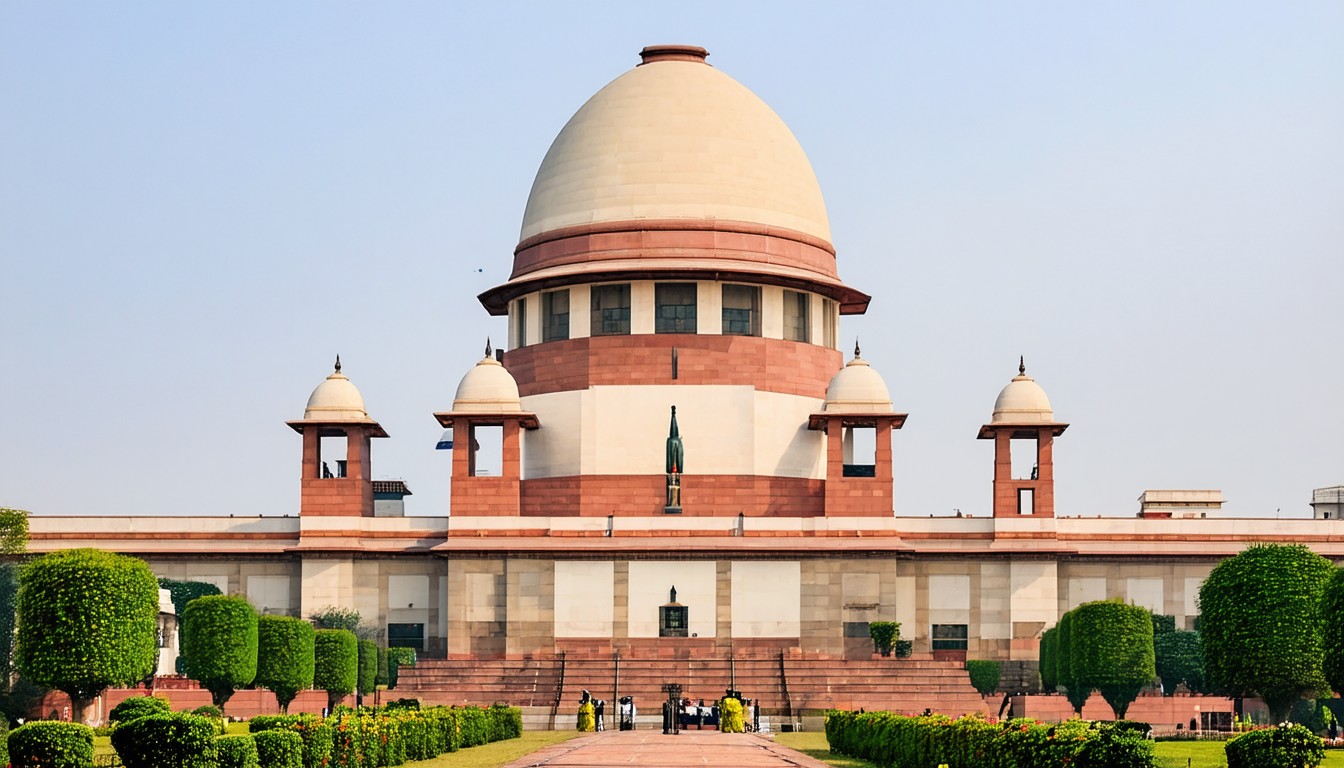
Article 124 of Indian Constitution: Appointment and Powers of Supreme Court Judges
India’s Supreme Court stands as the ultimate guardian of constitutional values and the rule of law. At the very heart of this vital institution lies Article 124 of the Indian Constitution—a provision that sets out, with fine detail, the composition, appointment, tenure, and powers of its judges. Since its inception in 1950, Article 124 has both structured the Supreme Court’s inner workings and become a focus for fierce debate regarding judicial independence, executive oversight, and the evolving nature of India’s democracy.
Unpacking Article 124: Key Provisions and Legislative Intent
Article 124 is the constitutional foundation for the Supreme Court’s existence and authority. It outlines several pivotal aspects:
- Establishment: Specifies that India shall have a Supreme Court of India, comprising a Chief Justice and a sanctioned number of other judges as determined by Parliament.
- Appointment: Details the process for appointing judges, involving the President, consultation with judges of the Supreme Court and High Courts, particularly in the selection of the Chief Justice of India (CJI).
- Qualifications: Stipulates minimum qualifications—citizenship of India, ten years as a High Court judge or at least five years as an advocate, or being a distinguished jurist.
- Tenure and Removal: Sets the retirement age (currently 65) and describes the rare and rigorous impeachment process necessary for removal.
Despite its apparent clarity, Article 124 has given rise to multiple interpretations in practice, leading to landmark decisions and persistent legal evolution.
The Appointment Process: Balancing Executive Power and Judicial Independence
Early Years: Presidential Control
Initially, the framers of the Constitution envisaged a system where the President, essentially on the advice of the executive, would appoint Supreme Court judges after consulting key legal and judicial figures. The intent was to ensure that no single organ—be it executive or judiciary—could dominate the process.
Evolutions: The Collegium System
Over time, concerns about executive encroachment led to judicial innovation. In the 1993 Second Judges Case, the Supreme Court interpreted Article 124 to mandate a “collegium” of senior judges, including the Chief Justice, to recommend appointments. The executive, while consulted, could no longer appoint or reject candidates arbitrarily.
“The framers of the Constitution intended a process that balanced accountability with independence. The emergence of the collegium system, though unwritten, is a response to the challenges of upholding that delicate equilibrium.”
— Prof. Upendra Baxi, Constitutional Scholar
Under this system, the judiciary holds decisive sway over who sits on the Supreme Court bench, though not without controversies regarding transparency and allegations of insularity.
Attempts at Reform: The NJAC Debate
In 2014, Parliament attempted to reform this via the National Judicial Appointments Commission (NJAC) Act, introducing lay representation in judicial appointments. However, the Supreme Court struck down the NJAC as unconstitutional in 2015, reasserting judicial primacy as crucial for independence.
Qualifications and Tenure: Ensuring Competence and Continuity
Article 124(3) and 124(4) set out strict eligibility criteria for appointment. The emphasis is on considerable legal experience or academic distinction, ensuring that Supreme Court judges command expertise and respect.
Qualifications in Detail
- High Court Experience: At least ten years as a judge of a High Court in India.
- Advocacy: A minimum five-year practice as an advocate in High Court(s).
- Distinguished Jurists: A rarely invoked clause, allowing Parliament to prescribe other exceptional qualifications.
This rigorous standard has kept the Court’s bench populated by individuals of high intellectual and ethical standing. Notably, debates continue around the lack of representation (by gender, regional, and social lines) despite formal qualifications being neutral.
Judicial Tenure and Removal
Supreme Court judges retire at 65. Their removal requires impeachment by Parliament on proven misbehavior or incapacity—a safeguard meant to insulate judges from external pressures. However, in practice, impeachments are exceedingly rare, with only a handful of attempted or initiated actions in Indian history.
Powers and Jurisdiction: The Supreme Court’s Expansive Authority
Article 124 establishes the Supreme Court, but its powers are defined throughout Part V, Chapter IV (Article 124-147). Still, Article 124 is the launching point for understanding the Court’s unique, sometimes controversial, role.
Original and Appellate Jurisdiction
The Supreme Court hears disputes involving government entities, states, and individuals, and acts as the court of last resort in civil and criminal matters. It also issues writs for the enforcement of fundamental rights.
Advisory Jurisdiction
On the President’s reference, the Supreme Court provides advisory opinions—though these are not binding, they carry significant weight in influencing legislative or executive action.
Judicial Review and Interpretative Power
Perhaps most critically, the Supreme Court has asserted its power to review laws, executive acts, and constitutional amendments for validity—protecting the Constitution’s “basic structure,” a doctrine emerging from decades of jurisprudence.
Real-World Impact: Milestones and Critiques
Landmark Decisions
Over the decades, Supreme Court judges appointed under Article 124 have presided over momentous cases:
- Kesavananda Bharati v. State of Kerala (1973): Established the basic structure doctrine.
- Maneka Gandhi v. Union of India (1978): Expanded the understanding of “personal liberty.”
- S.R. Bommai v. Union of India (1994): Defined limits on the President’s powers and state government dismissals.
Persistent Challenges
Despite its successes, India’s appointment and tenure process is not without criticism. The collegium system, though protecting judicial independence, is often seen as opaque and resistant to broader accountability. Concerns about lack of diversity, delay in appointments, and political undercurrents persist.
In recent years, delays in filling Supreme Court vacancies have drawn scrutiny, sometimes leading to bench strength dropping below sanctioned levels, which affects access to justice.
Comparative Insights: Judicial Appointments in Other Democracies
Comparing India’s Article 124 system to those in the United States or the United Kingdom reveals differing balances between executive, legislative, and judicial control.
- United States: The President nominates, and the Senate confirms Supreme Court Justices.
- United Kingdom: An independent commission recommends appointments with minimal political input.
India’s model, especially after the emergence of the collegium, is unique in the degree of judicial autonomy it affords while exposing tensions around transparency and democratic oversight.
Conclusion: Towards Accountability and Independence in the Supreme Court
Article 124 of the Indian Constitution remains the cornerstone of the Supreme Court’s legitimacy and functioning. Over seventy years, its basic framework has proven resilient, yet dynamic, adapting to the shifting sands of Indian democracy.
While controversy over appointments continues, Article 124’s core objective—to create a Supreme Court both independent and accountable—guides ongoing constitutional debate. Reform, if it comes, must continue to balance the Court’s pivotal role with the public’s call for transparency and representation.
FAQs
What is Article 124 of the Indian Constitution?
Article 124 lays down the framework for the establishment, appointment, qualifications, and removal of judges of the Supreme Court of India.
Who appoints Supreme Court judges as per Article 124?
Supreme Court judges are formally appointed by the President of India, typically based on recommendations made by the Collegium of senior Supreme Court judges.
What are the key qualifications for a Supreme Court judge under Article 124?
A candidate must be an Indian citizen, have at least ten years as a High Court judge, five years as an advocate in a High Court, or be recognized as a distinguished jurist.
Can a Supreme Court judge be removed from office? If so, how?
Yes, a Supreme Court judge can be removed only by impeachment on the grounds of proven misbehavior or incapacity, requiring a special majority in both houses of Parliament.
Has there been any attempt to change the appointment process established by Article 124?
Yes, the National Judicial Appointments Commission (NJAC) sought to alter this process, but it was declared unconstitutional by the Supreme Court, reinforcing the collegium system.
Why is Article 124 considered vital for judicial independence in India?
By outlining the process for appointment and secure tenure—including protection from arbitrary removal—Article 124 is crucial for safeguarding the independence of India’s highest judiciary.