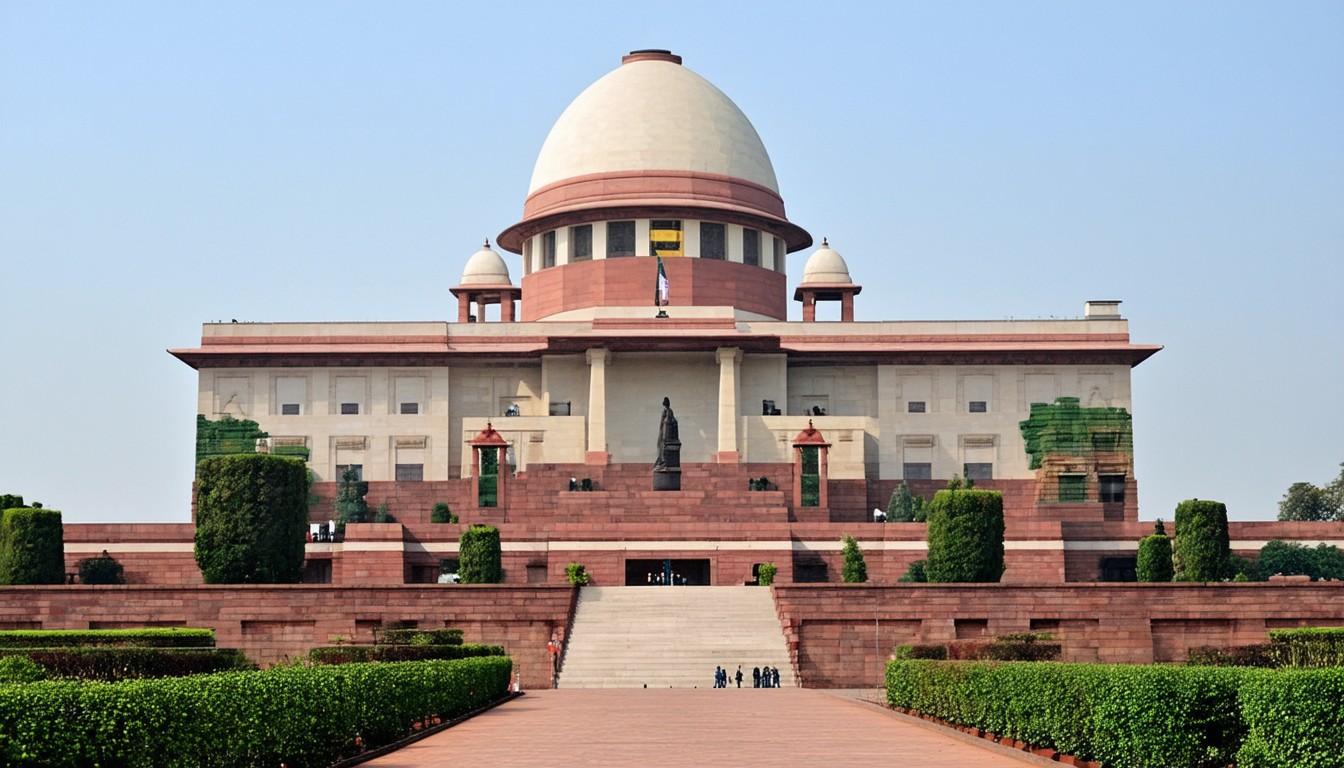
Article 142 of Indian Constitution: Supreme Court’s Powers Explained
Article 142 of the Indian Constitution stands as one of the most distinctive and far-reaching provisions in India’s legal framework. Crafted to ensure the supremacy of justice, this article empowers the Supreme Court of India to pass any order necessary to provide “complete justice” in any case before it. Over the years, Article 142 has been both lauded and debated for its sweeping authority, becoming a cornerstone in some of India’s most consequential judgements.
Origins and Text of Article 142
The makers of the Indian Constitution envisaged a judiciary that could rise above procedural limitations to safeguard justice and equity. Article 142 reflects this vision. Its principal clause (142(1)) states:
“The Supreme Court in the exercise of its jurisdiction may pass such decree or make such order as is necessary for doing complete justice in any cause or matter pending before it…”
These final words—“complete justice”—grant the Supreme Court discretionary authority not merely to interpret the law, but to ensure outcomes that might otherwise escape the rigidities of statutory mandates.
Purpose and Scope of Article 142
Providing Equitable Remedies Beyond Statute
At its core, Article 142 serves as a constitutional safety valve. It exists to prevent technicalities or legislative inadequacies from thwarting justice. While most courts are bound strictly by enacted laws, this provision explicitly authorizes the Supreme Court to transcend such constraints when doing so would be in the interests of fairness.
This unique scope was highlighted by former Chief Justice K. G. Balakrishnan:
“Article 142 embodies the spirit that justice should not be lost in the maze of technicalities. It equips the Supreme Court with the means to accomplish what is right, even where the statute is silent or insufficient.”
Relationship to Other Constitutional Provisions
Although Article 142 offers vast powers, it is not an unfettered license. The Supreme Court has acknowledged that these powers should be exercised sparingly and must not contravene the fundamental rights or the basic structure of the Constitution. Thus, Article 142 acts in tandem with—but not above—other constitutional protections.
Major Judgements Under Article 142
Notable Cases Where “Complete Justice” Prevails
Across decades, Article 142 has enabled the Supreme Court to craft pragmatic solutions in complex disputes. A few prominent examples include:
- The Bhopal Gas Tragedy Settlement (Union Carbide v. Union of India, 1989): The Court invoked Article 142 to approve a comprehensive settlement, overcoming procedural bottlenecks and enabling compensation for thousands of victims.
- Ayodhya Land Dispute (M. Siddiq v. Mahant Suresh Das, 2019): The historic resolution awarded the disputed land to a trust for temple construction, with an alternative plot for a mosque—achieved through the “complete justice” doctrine.
- Cancellation of 2G Spectrum Licenses (Centre for Public Interest Litigation v. Union of India, 2012): The Court annulled licenses issued through a flawed process, leveraging Article 142 to correct systemic malpractices and restore public trust.
- Orders on Environmental Protection: The Supreme Court has frequently cited Article 142 in progressive directives to tackle environmental degradation, such as in the Ganga pollution case and illegal mining matters.
Addressing Gaps in Law
In complex family disputes, matrimonial settlements, and cases involving interfaith marriages, Article 142 has allowed the apex court to grant divorces by mutual consent or settle alimony, even when statutory provisions were unclear or couldn’t be strictly applied due to exceptional circumstances.
Debates and Criticisms Surrounding Article 142
Concerns About Judicial Overreach
Despite its utility, Article 142 has occasionally sparked debate about the appropriate limits of judicial intervention. Legal scholars and jurists have cautioned against its habitual or unchecked use.
Critics argue that repeated reliance on Article 142 can blur the constitutional lines between the judiciary and the legislature or executive. In their view, the Supreme Court must avoid substituting its wisdom for the intent of lawmakers, except in the rarest cases.
Evolving Jurisprudence and Recent Trends
In response to these concerns, the Supreme Court has gradually circumscribed the application of Article 142. It now prefers to use the article to fill legal gaps, ensure compliance with its orders, or balance individual hardship against the public good—rather than to routinely craft new legal principles.
Prominent legal commentators have observed:
“The majesty of Article 142 lies in its capacity for constitutional innovation, but its legitimacy rests on judicial restraint and fidelity to the rule of law.”
Article 142 in Practice: Key Areas of Impact
Social Justice and Human Rights
In several landmark cases, Article 142 has been pivotal in advancing social justice—ranging from the regularization of unauthorized colonies to the rehabilitation of marginalized communities. Its judicious application has helped uphold the letter and spirit of India’s constitutional ideals.
Environmental and Public Policy
By invoking Article 142, the Supreme Court has transformed environmental governance in India, directing the closure of polluting industries, safeguarding forest land, and compelling public offices to implement clean-up measures.
Matrimonial and Family Law Relief
Article 142 facilitates practical resolutions in family law, especially where legislative remedies are lacking for issues like irretrievable breakdown of marriage. While Parliament has debated whether to codify such powers for all courts, for now, the Supreme Court remains uniquely equipped to deliver such relief.
Balancing Power: Safeguards and Judicial Self-Restraint
Recognizing the risks inherent in vast discretionary authority, the Supreme Court has repeatedly emphasized the principle of self-restraint. Recent judgements reiterate that Article 142 cannot be used to override express statutory prohibitions or to contravene substantive rights.
Example: Limits in Criminal Justice
For instance, in criminal matters, the Court has clarified that it cannot use Article 142 to acquit an accused on “humanitarian” grounds if the legal requirements for acquittal are not met.
Conclusion
Article 142 of the Indian Constitution remains a linchpin of the Supreme Court’s ability to ensure “complete justice.” While this power has allowed the judiciary to address extraordinary circumstances, carve equitable remedies, and correct systemic failures, its legitimacy depends on judicious use and unwavering respect for constitutional boundaries. For lawmakers, practitioners, and citizens alike, understanding both the promise and the limits of Article 142 is essential to appreciating its unique place within India’s legal landscape.
FAQs
What exactly does Article 142 of the Indian Constitution empower the Supreme Court to do?
Article 142 permits the Supreme Court to pass any order or decree necessary to deliver “complete justice” in cases before it, often bridging gaps where laws may be silent or insufficient.
Can Article 142 override existing laws?
While Article 142 allows some flexibility, the Supreme Court has clarified that these powers do not permit contravention of express statutory provisions or the basic structure of the Constitution.
Has Article 142 been used for landmark decisions?
Yes, Article 142 has underpinned several historic judgments, including the Bhopal Gas Tragedy settlement, the Ayodhya land dispute, and cases involving environmental protection.
Is Article 142 unique to the Supreme Court?
Yes, only the Supreme Court holds powers under Article 142; lower courts do not possess similar authority to provide “complete justice” by bypassing law.
Are there checks on the Court’s use of Article 142?
Safeguards exist, including the principles of judicial restraint and fidelity to constitutional limits. The Court itself has gradually narrowed and refined the circumstances under which this article is applied.
Why is there debate over Article 142?
Debate arises from concerns about “judicial overreach”—that is, whether frequent or expansive use of Article 142 could blur the separation of powers, making the judiciary too powerful at the expense of Parliament or the executive.